|
The Graceful Angels
By Jim Wolf , MS.Marine
Biology
The 50 plus species of angelfish
are some of the more striking fish. They vary in form, but can all be identified
by a small spine coming off their operculum (the plate covering the gills).
All of the angels require a well established aquarium with lots of algae
upon which to graze. A ultraviolet sterilizer will help curb infections
in a tank with lots of other reef fishes (tangs, butterflies, etc.) When
combining two or more angels invoke the "genus rule". The more closely
two angels are related the more likely they are to fight. If the animals
are close to the same size, and are in the same genus, the chances are
even greater. Once established all angels thrive on a varied diet rich
in vegetable matter, with occasional feeding of food soaked in vitamins.
There are eight genera of
angels in the world.
APOLEMICHTHYES This
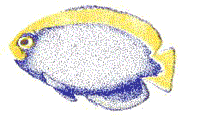
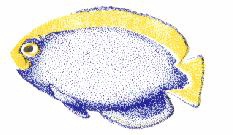
genus contain only 6 species with Black Banded and Goldflake angels being
good examples. They are prone to picking at their food, so take a piece
of coral and imbed frozen well balanced foods. Frequent small feedings
will greatly improve their chances.
CENTROPYGE There are
over 30 species of dwarf angels with new species being discovered all the
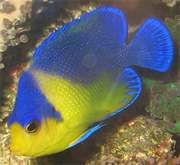
time. Familiar examples include; Flame, Potters, Coral Beauty, Lemon Peel
and the Resplendent. Dwarf angels need lots of algae to graze upon, and
are very popular introductions into reef aquariums. In the wild they are
often found in small shoals of females with one dominant male. If the male
is lost, the dominant female simply turns into a male!
CHAETODONTOPLUS They
are the expensive but hardy Personifier and Scribbled angels. They like
to pick at their food, and may be trained to eat lettuce from ones hand!
GENICANTHUS The Genicanthus
angels are quite unique. The male and female are usually different colors
and unlike other angels they thrive on a high protein diet of mysis shrimp
and other plankton. Soak some of their food in vitamins to insure ample
micro nutients in their diet.
HOLOCANTHUS These
eight include the Queen, Blue and Rock Beauties and are some of the most
aggressive and larger of the group reaching a length up to 1 foot. They
need a very diverse diet, including lettuce, flakes, plankton and live
rock to graze upon. If not taken care of they are prone to developing Lymphocystis.
This is a very non-fatal, non communicable disease that resembles small
whitish specks located a the margins of the body. It can’t be cured but
will be kept in check when provided with a good diet and water quality.
POMOCANTHUS French,
Navarchus and the Cortez angels round out this group. They are usually
quite secretive at first, especially Navarchus like angels, so insure that
they get some food. Lettuce, live rock and flakes are a good start. As
juveniles they may clean other fish and usually do not at all resemble
the color patterns of the adults.
PYGOPLITES AND EUXIPHIPOPS
The Regal and Navarchus (note some authorities put this fish in the genus
Pomocanthus) are perhaps the most challenging. They are passive feeders
that do not do well in a tank with lots of commotion. Feed them frequently
and insure they get plenty of different foods. Small specimens would do
best if placed in a reef aqaurium.
|